
The Storting, Norway’s parliament
Parliament and its stone lions on Karl Johans gate
The semicircular debating chamber gives Norway’s parliament its distinctive shape. Two stone lions stand beside the entrance steps, with Eidsvolls plass stretching out in front.
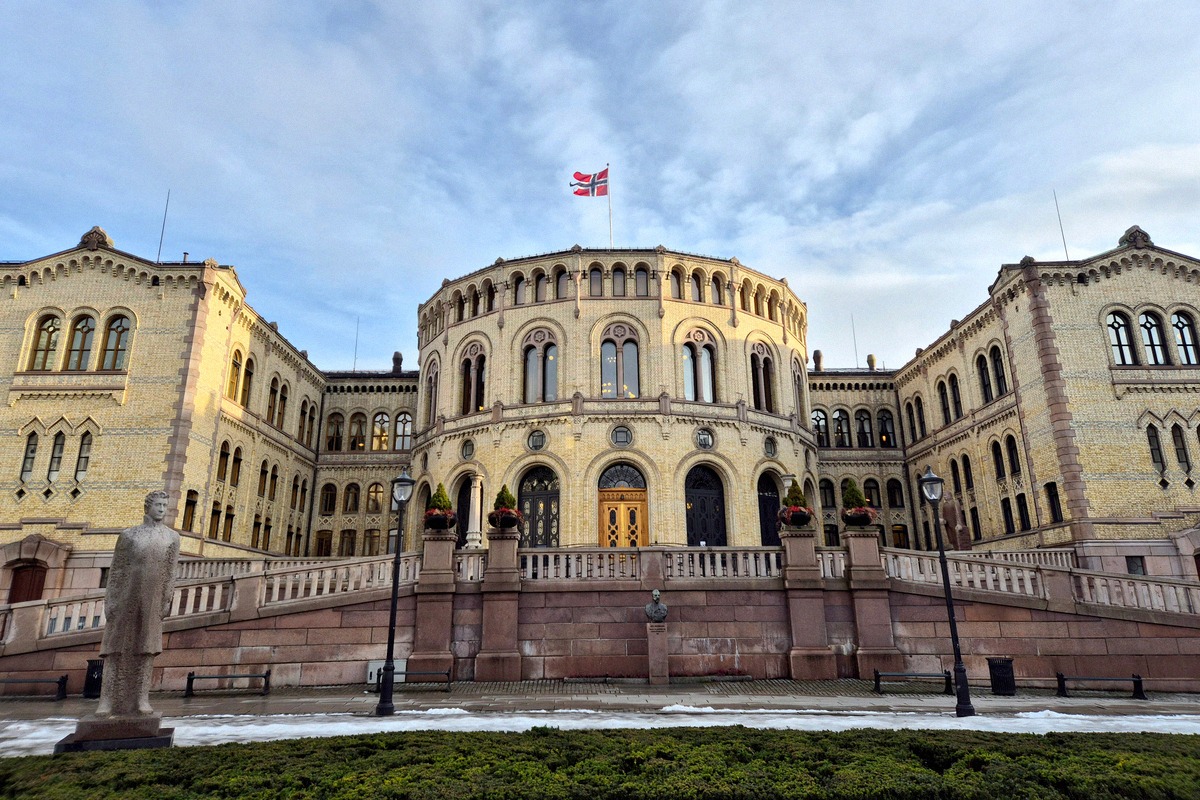
A debating chamber facing the street
On Karl Johans gate, parliament’s most important room faces the street. Swedish architect Emil Victor Langlet placed the rounded chamber in front of the two side wings. Its arched windows make it clear from the square where the members of parliament meet. Langlet designed nine arched entrances so that parliament would open towards the city from several directions.
When the Storting first met in the new building on 5 March 1866, its members had already spent more than fifty years meeting in borrowed rooms. A later extension towards Akersgata added offices. This part is barely visible from the square in front of the main façade.
The lions and the public gallery
The granite lions beside the entrance gave the steps their name, Løvebakken, meaning Lion Hill. From Eidsvolls plass, the lions, wings and rounded chamber can all be seen together. Inside the chamber, Oscar Wergeland’s painting of the constituent assembly at Eidsvoll recalls the events of 1814.
You can watch public sittings from the public gallery. This is a different visit from a guided tour of the building. Tours have their own dates and times, while gallery visits depend on when parliament is sitting.