
Holmenkollen
Ski jump and ski museum above Oslo
The Holmenkollen ski jump stands on the wooded north-western edge of Oslo. Its distinctive steel tower, ski museum and views across the city and fjord bring together the landscape and Norway’s winter sports history.
Contents
A ski jump with a long sporting history
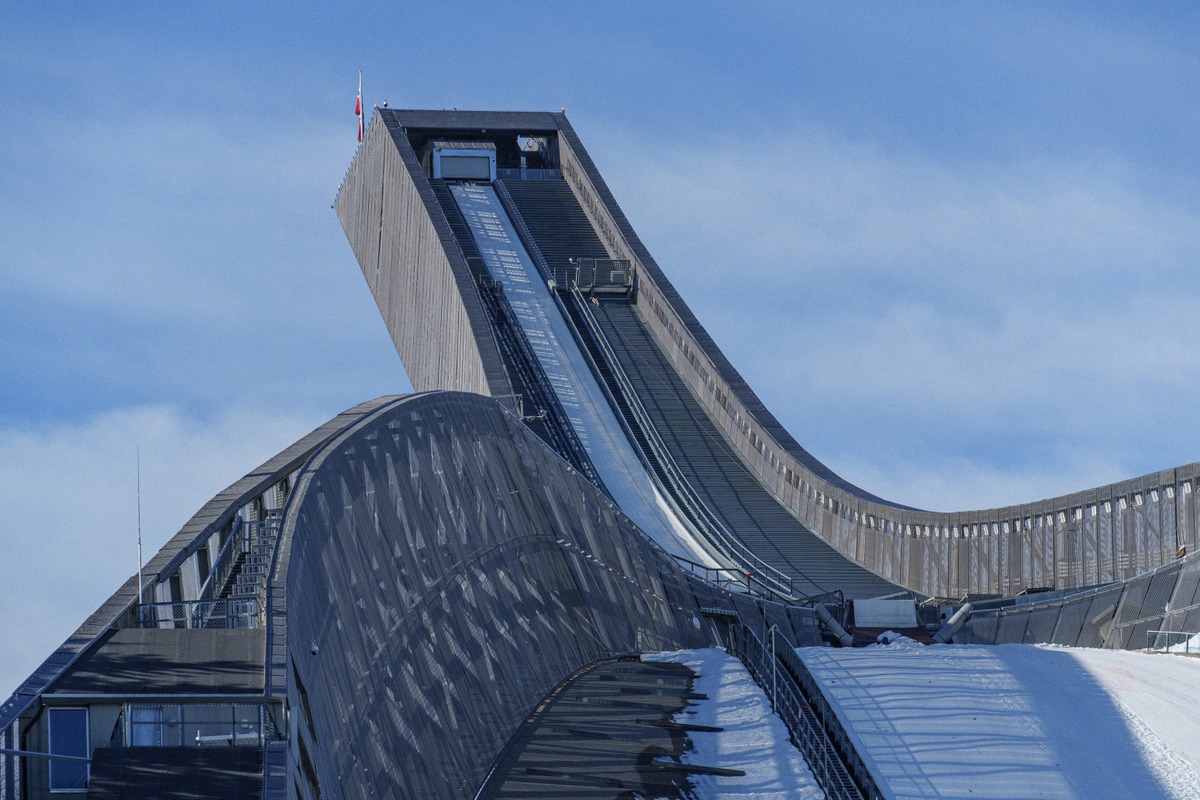
Ski jumping competitions have taken place at Holmenkollen since 1892. The venue has been rebuilt several times. The current jump dates from the 2011 Nordic World Ski Championships. Its curved steel structure rises above the spectator area and remains a striking landmark on the edge of the city even when no competition is taking place.
Holmenkollen also hosted events at the 1952 Winter Olympics, linking the venue to several generations of Norwegian skiing. Major events affect normal museum operations and turn the grounds into a sports stadium. If you are coming for the exhibitions, check whether your visit falls on a competition day.
The ski museum and jump tower
Founded in 1923, the ski museum explores the long history of skiing. Historic skis and equipment show how travelling over snow was part of everyday life long before skiing became a competitive sport. Polar history is another focus: skis were essential equipment on the expeditions of Fridtjof Nansen and Roald Amundsen.
The museum sits beneath the ski jump. A visit also includes the view from the jump tower, where you can appreciate just how steeply the structure rises. City, fjord and forest meet below. The exhibitions add the story of how ski equipment, techniques and culture developed.
On the edge of Nordmarka
You can reach Holmenkollen by metro from the city centre, followed by an uphill walk from the station. The grounds lie at the edge of the Nordmarka forests. Further uphill are Holmenkollen Chapel and Frognerseteren, with its historic wooden architecture. For more on the expeditions behind the polar exhibits, the Fram Museum on Bygdøy centres on the original expedition ships.