
Fram Museum
Original polar exploration ships on Bygdøy
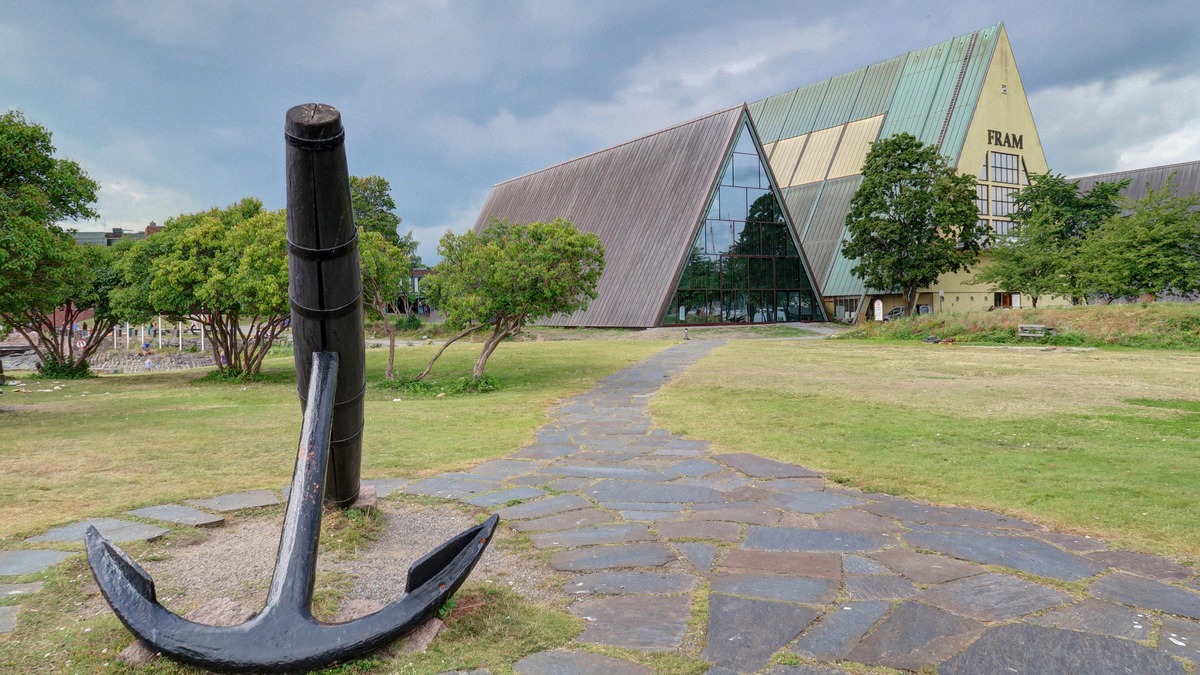
The Fram Museum on Bygdøy preserves the polar exploration ships Fram and Gjøa. Aboard the vessels and in the exhibitions, you can learn about Norwegian expeditions to the Arctic and Antarctic and the lives of their crews.
Contents
Fram and its expeditions
Fram was built in 1892 as a research ship for the polar regions. Its exceptionally strong construction was designed to withstand the pressure of the ice. Fridtjof Nansen used it for his drift across the Arctic Ocean from 1893 to 1896. The attempt relied on harnessing the ocean current rather than continually breaking through the ice.
Otto Sverdrup later sailed the ship to the Canadian Arctic. On a third major voyage, Fram carried Roald Amundsen’s expedition to Antarctica. From there, his team reached the South Pole in 1911. The ship thus links several expeditions with different aims and methods.
Aboard the expedition ships
At the museum, you can see Fram close up and go aboard. Its decks and interiors reveal how little space the crew had on long voyages. The exhibition tells the story of the expeditions, their preparations and the people aboard. Equipment and everyday supplies were as vital to their success as navigation and scientific observation.
A second building houses Gjøa. Amundsen sailed it through the entire Northwest Passage between 1903 and 1906, becoming the first person to complete the route. This smaller vessel shows how different polar exploration ships could be. It has stood in its own protective building at the museum since 2013.
By the water at Bygdøynes
The Fram Museum stands at the southern tip of the Bygdøy peninsula. Nearby is the Kon-Tiki Museum, with Heyerdahl’s raft and reed boat. Both museums display original expedition vessels, but explore different seas and research questions. The Norsk Folkemuseum, further inland on the peninsula, focuses on life in Norway.