
Norsk Folkemuseum
Historic houses and everyday life on Bygdøy
Norsk Folkemuseum, the Norwegian Museum of Cultural History, explores everyday life in Norway through historic buildings and exhibitions on Bygdøy. Farmsteads, townhouses and the medieval stave church from Gol reveal different ways of life.
Contents
Historic houses and everyday life
Founded in 1894 by Hans Aall, the museum collects objects and buildings from Norway’s cultural history. The open-air section contains houses moved here from their original locations. Their construction shows how homes and working life differed between regions, towns and the countryside.
Rather than viewing individual pieces of furniture behind glass, you can see whole rooms and buildings in context. Farm buildings, homes and town streets reveal the routines of everyday life. The museum therefore includes extensive outdoor grounds, with outdoor paths connecting the exhibitions. Interiors add household objects, crafts and furnishings to the architectural displays.
The stave church from Gol
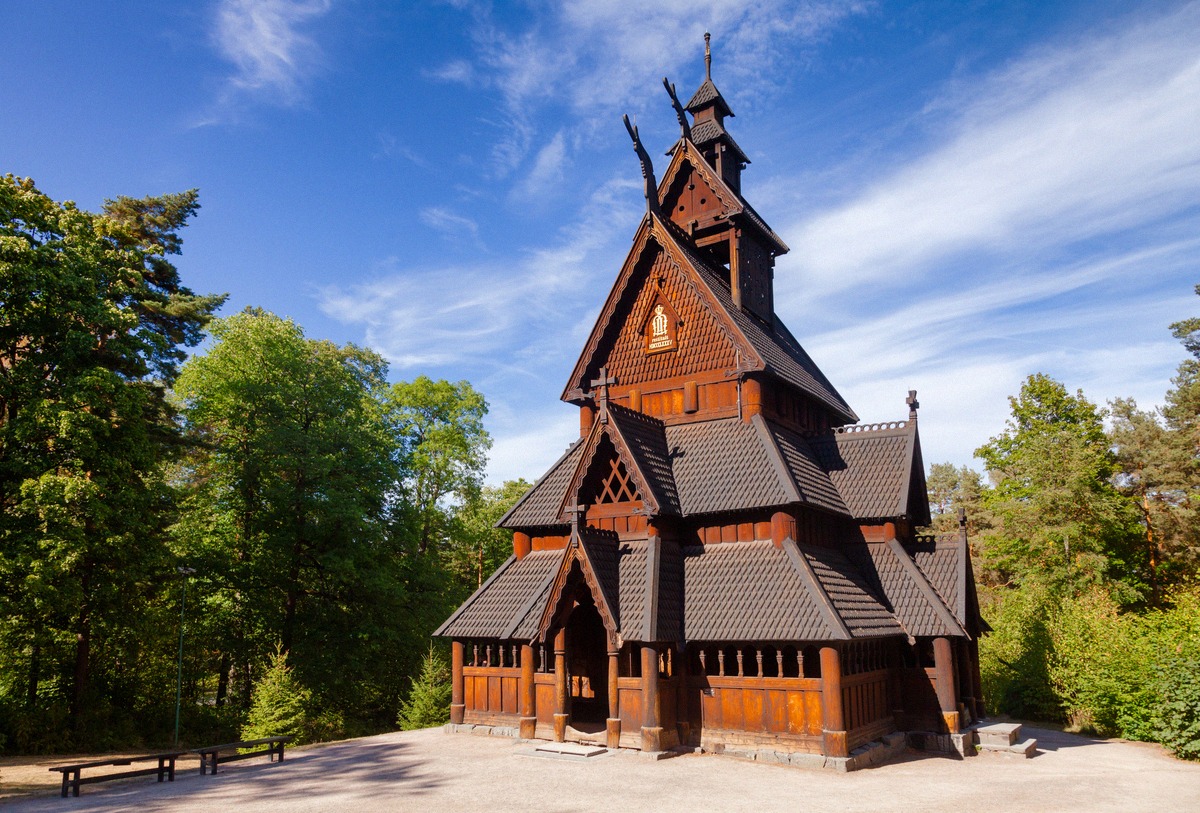
One of the museum’s defining buildings is the stave church from Gol. It dates from around 1200 and was re-erected on Bygdøy in 1884. King Oscar II funded the reconstruction. The church was thus already part of a historic building collection here before the present museum was founded.
Its tall timber frame, tiered roofs and carved doorways give it its distinctive character. During reconstruction, missing medieval elements were added using other stave churches as models. Its appearance today therefore also reflects 19th-century approaches to conservation. Surviving paintings in the chancel recall later changes after the Reformation.
Exhibitions and the open-air museum
The collections focus mainly on life in Norway from the early modern period onwards. Craft demonstrations and other activities complement the programme depending on the season; they do not take place in every building as a matter of course. The Fram Museum and the Kon-Tiki Museum are on the same peninsula. The Viking Ship Museum, however, remains closed during redevelopment.