
Akershus Fortress
A medieval castle and historic defences above the fjord
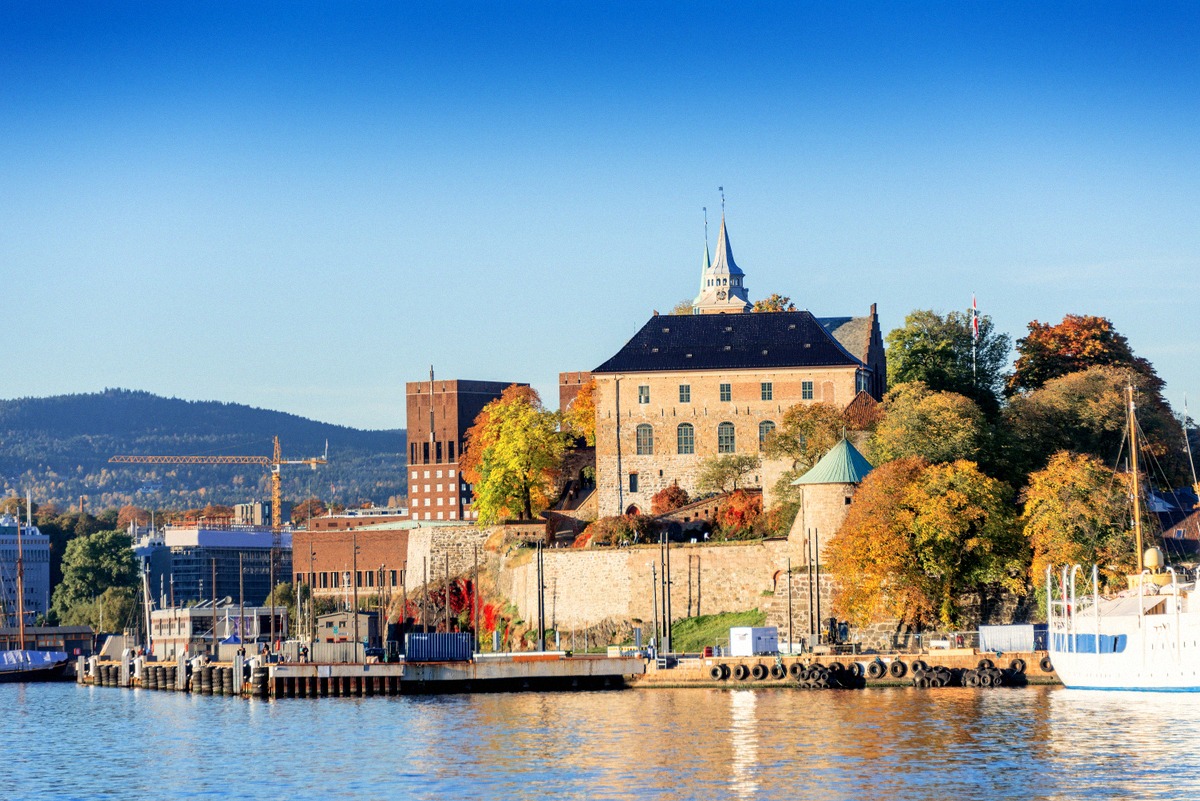
Akershus stands on high ground above the Oslofjord, on the edge of the city centre. The complex includes a medieval castle, later fortifications and museums exploring Norway’s military history and wartime occupation.
Contents
Castle and fortress
Akershus dates back to the late 13th century. The castle defended Oslo against attacks from the water and served as a royal residence. In the 17th century, Christian IV had parts of it remodelled as a Renaissance palace. Medieval masonry and later state rooms therefore sit within the same building.
The castle and the surrounding fortress grounds are distinct areas to visit. Akershus slott is the main building on the hill within the extensive fortifications. The fortress also includes ramparts, courtyards, green spaces and other buildings. It remains in military use, so some buildings within the grounds are closed to the public.
The castle church and royal mausoleum
The route through the castle takes in former prison rooms, the castle church, the royal mausoleum and historic halls. The state rooms are still used for official occasions. The castle can therefore close at short notice; access to the outer fortress grounds is managed separately.
The hilltop setting explains the site’s defensive role. Open areas overlook the harbour and the shores opposite. The grounds extend over several levels, with paved paths, steps and historic passageways.
Occupation and resistance
During the German occupation from 1940 to 1945, Akershus was also a prison and execution site. The Resistance Museum within the grounds explores this period. The Defence Museum, also on the site, covers a longer span of military history. Each museum has its own opening hours.
The fortress is within walking distance of the city centre. Across the harbour stands the National Museum; a waterfront walk links the historic fortifications with the newer museum district.